

Showing posts with label Tips & Tricks. Show all posts
Showing posts with label Tips & Tricks. Show all posts
Monday, December 5, 2016
Making a better blog...

 computer professional, motorcycle enthusiast, web site designer, amateur magician, and all around mad scientist.
Sunday, December 4, 2016
What I learned about Blogging and Image Storage
 Some of the posts made to this blog back when it was hosted at Blog.com were recently found and a valuable lesson was learned.
Consistently store posted images on an external image storage site! Postimg.org was and is the blog's external image host site.The only problem? It was never consistently used! In other words, sometimes images were posted using the blog's local image storage and other times postimg.org was used.
computer professional, motorcycle enthusiast, web site designer, amateur magician, and all around mad scientist.
Sunday, March 31, 2013
Home tank: aeration and feeding
computer professional, motorcycle enthusiast, web site designer, amateur magician, and all around mad scientist.
Monday, March 11, 2013
To clean, or not to clean?:
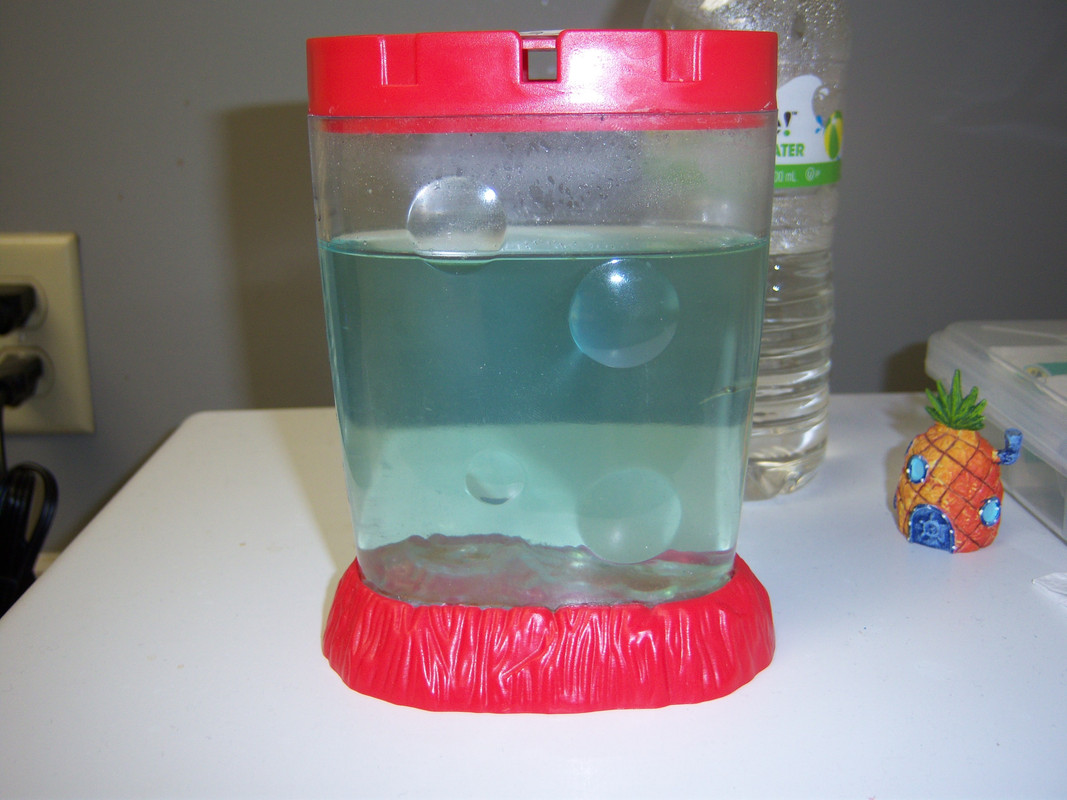 As your Sea-Monkeys age, sediment will begin to gather in the bottom of your tank -- a combination of food, algae, waste and un-hatched eggs. This is a natural part of the process and is not necessarily harmful to your pets. In fact, the Sea-Monkeys seem to enjoy routing around the murky basin. I choose not to clean my tanks -- rather let the process in their ecosystem continue naturally.
computer professional, motorcycle enthusiast, web site designer, amateur magician, and all around mad scientist.
As your Sea-Monkeys age, sediment will begin to gather in the bottom of your tank -- a combination of food, algae, waste and un-hatched eggs. This is a natural part of the process and is not necessarily harmful to your pets. In fact, the Sea-Monkeys seem to enjoy routing around the murky basin. I choose not to clean my tanks -- rather let the process in their ecosystem continue naturally.
computer professional, motorcycle enthusiast, web site designer, amateur magician, and all around mad scientist.
Wednesday, March 6, 2013
Come on in, the water's fine:

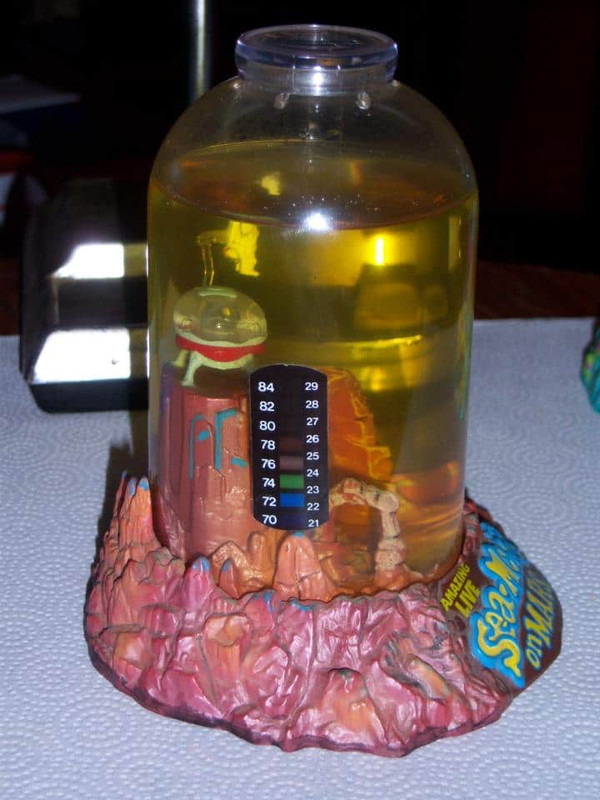 To help keep your Sea-Monkeys water at a cozy 70+ degrees, pick up an aquarium thermometer from your local pet store (Wal-Mart...). These inexpensive units are a thin, smallish piece of plastic that will stick right on the OUTSIDE of your Ocean-Zoo tank and help you chart the comfort-zone within.
computer professional, motorcycle enthusiast, web site designer, amateur magician, and all around mad scientist.
To help keep your Sea-Monkeys water at a cozy 70+ degrees, pick up an aquarium thermometer from your local pet store (Wal-Mart...). These inexpensive units are a thin, smallish piece of plastic that will stick right on the OUTSIDE of your Ocean-Zoo tank and help you chart the comfort-zone within.
computer professional, motorcycle enthusiast, web site designer, amateur magician, and all around mad scientist.
Tuesday, March 5, 2013
The Carbonic Plague
 computer professional, motorcycle enthusiast, web site designer, amateur magician, and all around mad scientist.
Wednesday, February 27, 2013
Water Temperature
Water temperature is pretty important. According to the hatching guide optimal hatching temperature is between 75°F and 80°F.
computer professional, motorcycle enthusiast, web site designer, amateur magician, and all around mad scientist.
Friday, February 22, 2013
Plasma III
 I always use Plasma III with my experiments. I have noticed that kits being made these days aren't including it like they used to... I have a good supply from Transcience, So I always have a packet to add to any new experiment I begin. On the tenth day I add three large scoops of plasma and one large scoop every 10 days afterwards until it is all gone. It it adds a few extra eggs to water so you might see a few newborns a couple of days later.
computer professional, motorcycle enthusiast, web site designer, amateur magician, and all around mad scientist.
I always use Plasma III with my experiments. I have noticed that kits being made these days aren't including it like they used to... I have a good supply from Transcience, So I always have a packet to add to any new experiment I begin. On the tenth day I add three large scoops of plasma and one large scoop every 10 days afterwards until it is all gone. It it adds a few extra eggs to water so you might see a few newborns a couple of days later.
computer professional, motorcycle enthusiast, web site designer, amateur magician, and all around mad scientist.
Wednesday, February 20, 2013
How do you begin your experiments?
When I start new experiments, I don't wait 24 hours any longer before adding packet 2. I just mix packet 1 and 2 at the same time. I feed every 5 to 7 days and add 3 large scoops of plasma III on the tenth day and one large scoop every 10 days thereafter until the packet is gone. If the first hatching dies off, the experiment doesn't end. More will likely hatch later. If at least one female survives she will usually have more babies after a few days. An experiment can go on indefinitely as there will always be a new hatching every few weeks.
computer professional, motorcycle enthusiast, web site designer, amateur magician, and all around mad scientist.
Subscribe to:
Posts (Atom)